How AI Actually Saves Operators Time
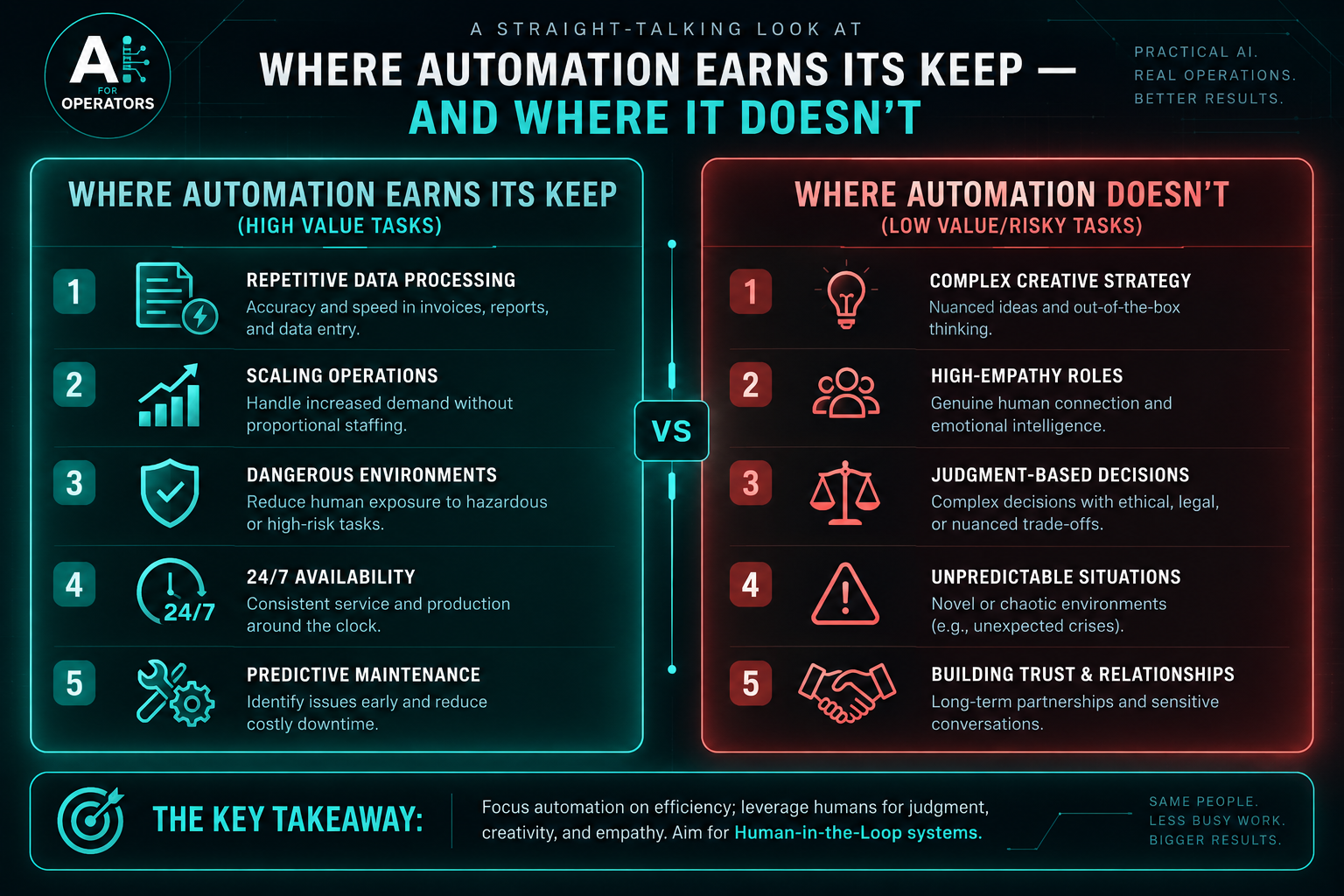

Three Ways AI Actually Saves Time


1. It handles repetitive work

 
AI can handle predictable first steps before handing exceptions to a person.

Message → AI classifies → System routes → Human handles exceptions

The person isn't replaced. The unnecessary work is.

2. Faster Decisions
 
Operators often spend more time gathering and organizing information than actually making decisions.

AI can summarize what changed, identify what's unusual, and surface what actually needs attention.

3. Easier Access to Information

 SOPs, policies, customer histories, and training documents are only useful if people can find them.

AI can make existing information searchable through natural language.

The value isn't that AI knows everything. It's reducing the friction between information existing and someone actually using it.

Don't Automate a Broken Process

This is where operators need to be careful. AI can make an inefficient process faster without making it better.


Before automating a workflow, ask:

  1. Does this process need to exist?
  2. Does every step need to exist?
  3. Does a human need to perform every step?

Where can AI reliably take over?

Sensitive customers, financial decisions, safety issues, and complex judgment may still require a human.

The goal isn't to remove people. It's to put people where their judgment actually matters.


It's to put people where their judgment actually matters.

Find the Work Worth Automating

  • Frequent. Repetitive. High-volume. Measurable. Low-risk.

 
For example, 100 inquiries a week at three minutes of administrative processing each equals five hours every week.

If AI can reliably handle part of that workflow, those hours can go toward customers, sales, management, or strategy.

And that's just one workflow.

And that's just one workflow.

The Best AI Is Often Invisible

 A successful AI implementation doesn't have to be impressive.


It can simply mean:

  • Reports appear automatically.
  • Leads get routed immediately.
  • Routine questions get answered.
  • Information is found in seconds.
  • Exceptions are surfaced before they become problems.
  • Employees spend less time moving information around.


Nobody needs to be impressed by that. It just needs to make the operation easier to run.

That's the real measure of AI. Not how advanced the technology looks. Not how many tools you have. How much unnecessary work it removes.

Because the goal isn't to put more AI into your operation.

The goal is to create less operational friction.

THE OPERATOR TAKEAWAY

AI isn't about replacing your operators. It's about giving them their time back.


Start with the work. Fix the process. Then determine where AI can actually help.

Because the goal isn't to use more AI.


It's to create less operational friction.


Ready to Find Where AI Can Actually Help?


RealAIforOperators helps businesses identify practical opportunities for AI and automation—without the hype, unnecessary complexity, or pressure to automate everything.


Let's find the work worth automating.


By Weekilife Admin • November 13, 2026
YOUR BUSINESS DOESN'T NEED MORE TOOLS A practical look at how disconnected software, scattered information, and too many platforms quietly slow down business operations. WHY DISCONNECTED SYSTEMS SLOW YOU DOWN: Most businesses use multiple tools to manage daily operations. One platform handles customers, another manages scheduling, another tracks tasks, and another handles communication. The problem? These systems don't always talk to each other. Employees end up copying information, switching between platforms, chasing updates, and manually keeping everything organized. More software doesn't automatically mean better operations. WHERE CONNECTED SYSTEMS MAKE A DIFFERENCE: A well-connected operation allows information to move between tools without unnecessary manual work. For example: New leads automatically enter your CRM. Customer inquiries create tasks for the right team member. Completed jobs trigger customer follow-ups. Important updates reach the right people. Reports pull information from multiple systems. Instead of managing five disconnected processes, your team works through one coordinated workflow. The goal is to make your tools work together, not make your employees connect the dots. Ready to Find Where AI Can Actually Help? Your business probably doesn't need another subscription. It needs the systems you already have to work better together. Before investing in another platform, look at where information gets stuck, where employees repeat work, and where manual handoffs slow everything down. Here at Real AI for Operators, we believe better operations start with better-connected processes. Connect your systems. Simplify your workflows. Give your team time back.
October 14, 2026
THE PROBLEM WITH BAD AUTOMATION: Automation is supposed to make work easier. But a poorly designed workflow can create duplicate records, unnecessary notifications, missed steps, and more manual cleanup. Suddenly, the team isn't managing the original task. They're managing the automation. The goal isn't to automate as much as possible. It's to remove unnecessary work without creating new friction. WHAT GOOD AUTOMATION LOOKS LIKE: A useful automation should make the process simpler from beginning to end. It should: • Reduce repetitive work • Move information automatically • Trigger the right action at the right time • Keep the right people informed • Handle predictable situations consistently • Know when to hand something back to a human The best workflows are often the simplest ones. Trigger → Action → Result No unnecessary steps. No duplicate systems. No constant babysitting. THE OPERATOR TAKEAWAY: If an automation needs someone constantly checking, fixing, and maintaining it, you haven't eliminated the work. You've moved it somewhere else. Before building an automation, ask: Does this actually save time? Does it reduce friction? And what happens when something goes wrong? Ready to Find Where AI Can Actually Help? Here at RealAIforOperators we believe automation should make the business easier to operate , not harder to manage . Let's find the work worth automating.
September 10, 2026
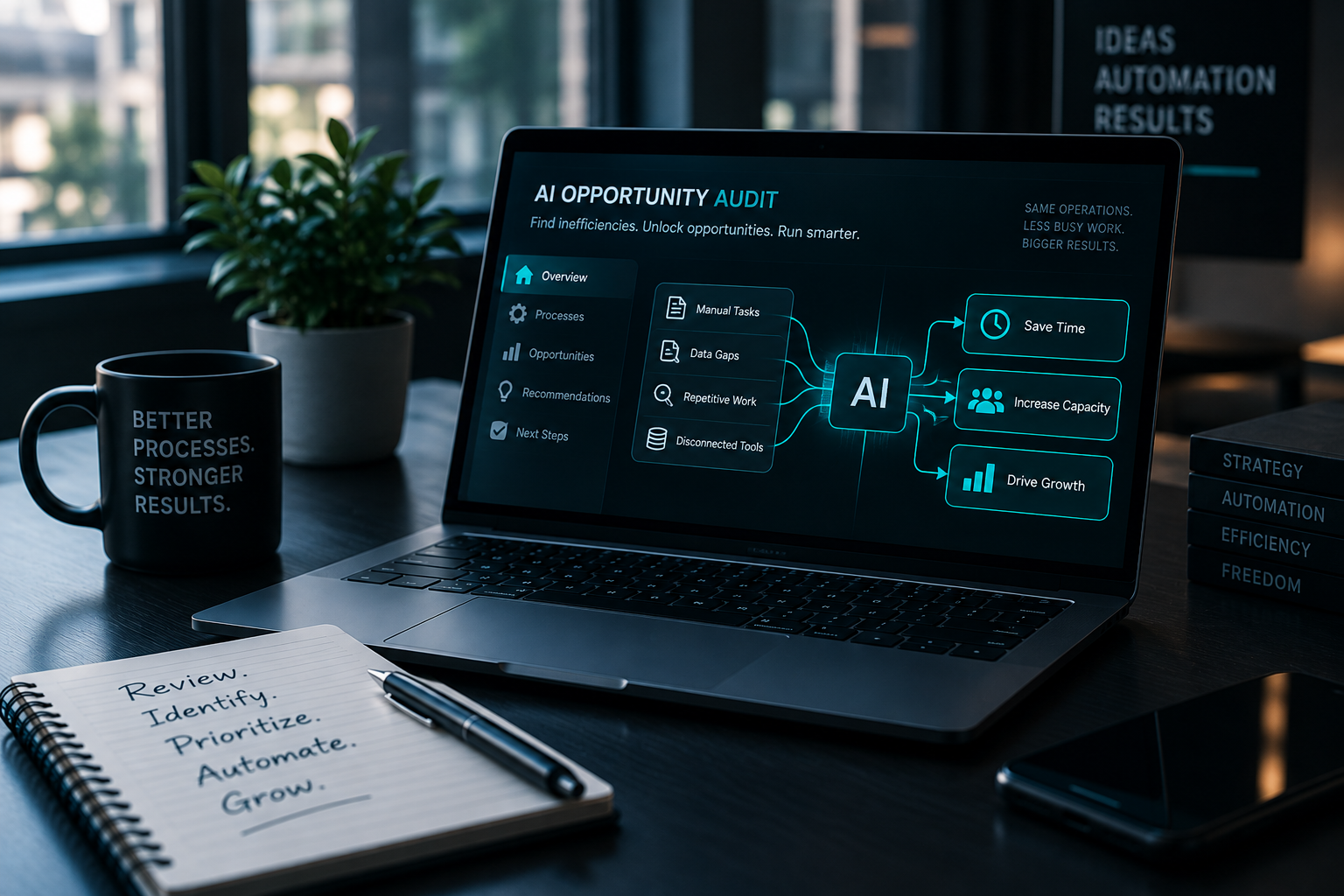
WHY AN AI AUDIT MATTERS Most businesses know AI can probably help somewhere. The problem is figuring out where it will actually make a difference. An audit looks at how your business operates today — where people spend time, where information gets stuck, and where repetitive work is happening. The goal isn't to find more AI. It's to find the right opportunities. WHAT THE AUDIT UNCOVERS A good audit often finds opportunities hiding in everyday work: • Repetitive data entry and administrative tasks • Leads or customer requests sitting too long • Manual follow-ups that are easy to forget • Employees searching for information that already exists • Reports that take hours to prepare • Multiple systems that don't communicate with each other From there, each opportunity can be evaluated based on time saved, business impact, complexity, and risk. Sometimes the answer is AI. Sometimes it's simple automation. Sometimes it's fixing the process first.
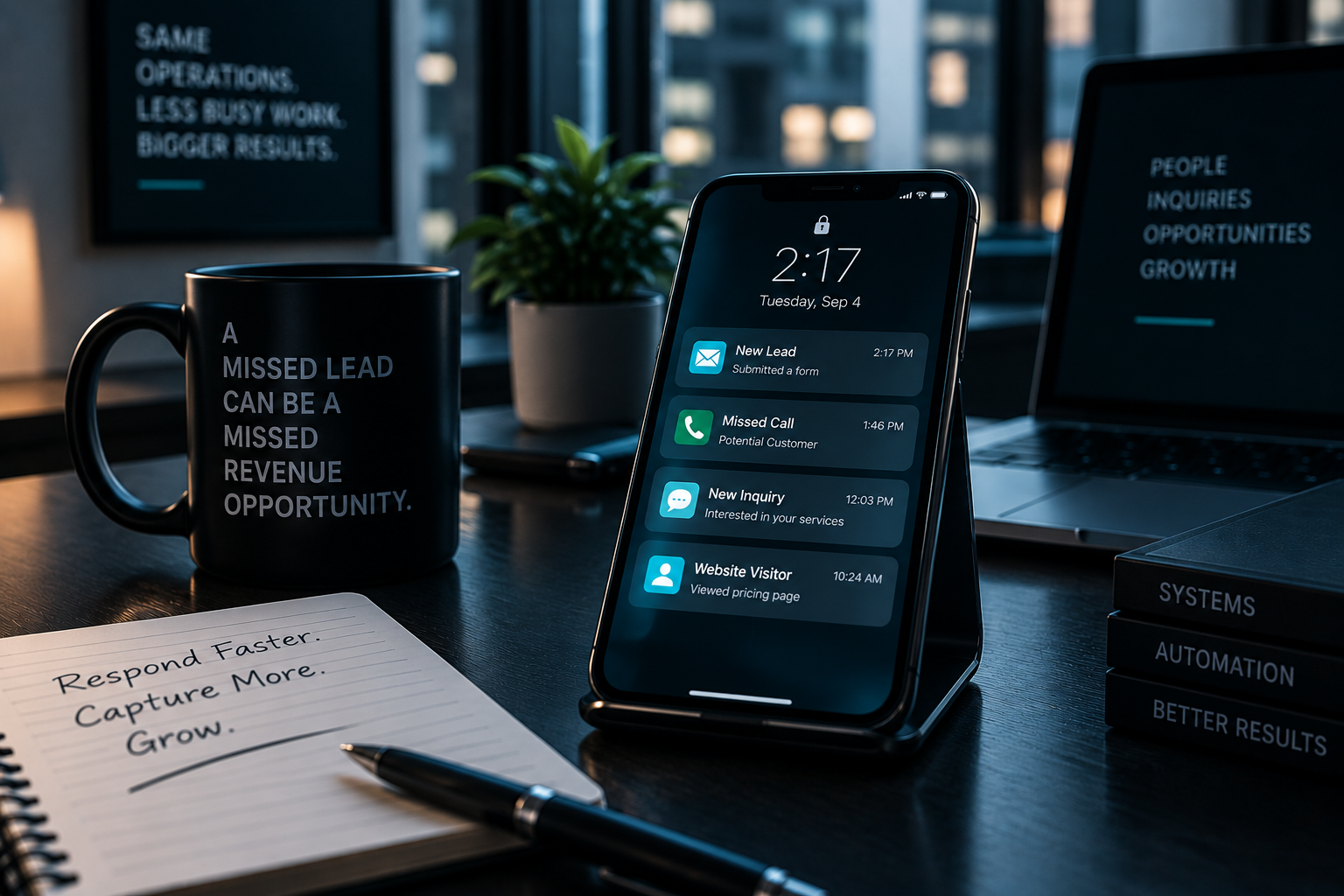
September 3, 2026
WHY SPEED MATTERS When a lead reaches your business, they're already showing intent. The problem is that intent doesn't last forever. A lead that sits unanswered for 20 minutes can easily become a lead that belongs to someone else. AI can help businesses respond immediately, capture the right information, and get the lead to the right person before the opportunity goes cold. The goal isn't to replace your sales team. It's to make sure they get the opportunity while it still matters. WHERE AI EARNS ITS KEEP A good lead-response system can handle the repetitive work automatically: • Capture and organize new leads • Identify what the customer needs • Send an immediate, useful response • Route the lead to the right person • Flag high-value or urgent opportunities • Trigger follow-up when nobody responds Instead of your team constantly checking inboxes and chasing information, AI handles the first steps and lets people focus on the conversation. Less waiting. Less admin. More opportunities reaching your team.